
ICCEHS Co-Hosted a High-Level Conference
at the European Parliament Office in Rome
Dr. Nidal Shoukeir: “Supporting the UAE and Bahrain
is an Investment in Global Peace and Human Security”
Rome, 30 June 2026
The International Committee on Countering Extremist and Hate Speech (ICCEHS) co-hosted a landmark international conference entitled “A New EU Vision for Cooperation in the Greater Mediterranean and the Gulf” at the European Parliament Office in Rome, bringing together more than 150 high-level officials, policymakers, diplomats, academics, and civil society leaders from over 30 countries across the Euro-Mediterranean and Gulf regions.

Held in Sala Europa under the patronage of the European Commission Representation in Italy, the conference was organized in partnership with the Italian Anna Lindh Foundation (ALF) Network, the European Gulf Information Center (EGIC), the International Centre for Black Sea Studies (ICBSS), Mediterranean Perspectives, and the Medi-Jer Annual Euro-Med Inter-Institutional Initiative. The event marked a significant milestone in strengthening Euro-Mediterranean dialogue and advancing strategic cooperation between Europe and the Gulf.
In his keynote address, Dr. Nidal Shoukeir, Executive Board Director of the International Committee on Countering Extremist and Hate Speech (ICCEHS), reaffirmed the Committee’s unwavering commitment to peace, dialogue, and human dignity.
“We firmly believe that humanity has no alternative but to choose the path of peace. Our values are rooted in tolerance, coexistence, mutual respect, and meaningful dialogue. For this reason, we naturally support every sincere initiative and every genuine path that leads to peace.”
Dr. Shoukeir emphasized that the Committee places people at the center of its mission. “Our priority is the human being. Our mission is to help societies move beyond unnecessary conflicts fueled by hatred, extremism, and divisive narratives. We believe that every human life deserves dignity, security, and hope.”
Addressing the future of regional peace, Dr. Shoukeir underlined the importance of the Abraham Accords as a strategic opportunity for long-term stability.
“Today, beyond political populism and ideological slogans, we believe that the Abraham Accords represent a genuine opportunity for peace—a peace built on mutual recognition, cooperation, and shared prosperity. It is a peace that safeguards the dignity and rights of every human being, without exception.”
Dr. Shoukeir concluded with a strong appeal to European leaders and institutions to deepen cooperation with Gulf partners committed to peace and moderation.
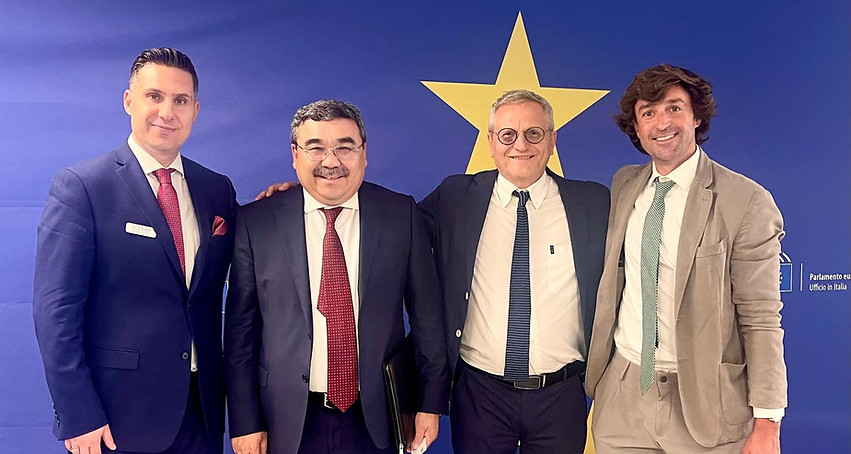
“We call on Europe to stand firmly alongside the Gulf countries—especially the United Arab Emirates and the Kingdom of Bahrain—which have demonstrated remarkable leadership in advancing the vision of the Abraham Accords and promoting a culture of tolerance, interfaith dialogue, and peaceful coexistence.
At this decisive moment, supporting these efforts is not simply a matter of regional policy; it is an investment in global peace and human security. Europe and the Gulf share a unique opportunity to build a strategic partnership that goes beyond diplomacy—one that empowers younger generations, strengthens people-to-people connections, combats extremism, and transforms coexistence from an aspiration into a lived reality.
Together, Europe and the Gulf can send a powerful message to the world: peace is stronger than hatred, dialogue is more powerful than division, and our shared humanity will always prevail over extremism. This is not only a regional responsibility—it is a global mission that deserves our collective commitment and action.”
The conference also featured interventions from distinguished members of the International Committee on Countering Extremist and Hate Speech (ICCEHS), highlighting the indispensable role of responsible public discourse, strategic communication, and international cooperation in addressing the growing challenges of extremism, hate speech, and regional instability.

Hon. Gennaro Migliore, Advisory Board Director of ICCEHS, stressed the critical importance of responsible public discourse in preserving peace and preventing conflict.
“Every war, persecution, or genocide begins with words. Our responsibility is to ensure that our words build bridges, not walls, and that dialogue prevails over division. Countering hate speech is not merely a communications challenge—it is a moral, political, and societal responsibility that requires the collective commitment of governments, institutions, civil society, academia, and the media.”
Hon. Migliore further emphasized that democratic societies must continue investing in education, intercultural dialogue, and international partnerships to prevent the spread of extremist narratives, strengthen social cohesion, and foster a lasting culture of mutual respect and peaceful coexistence.
.jpeg)
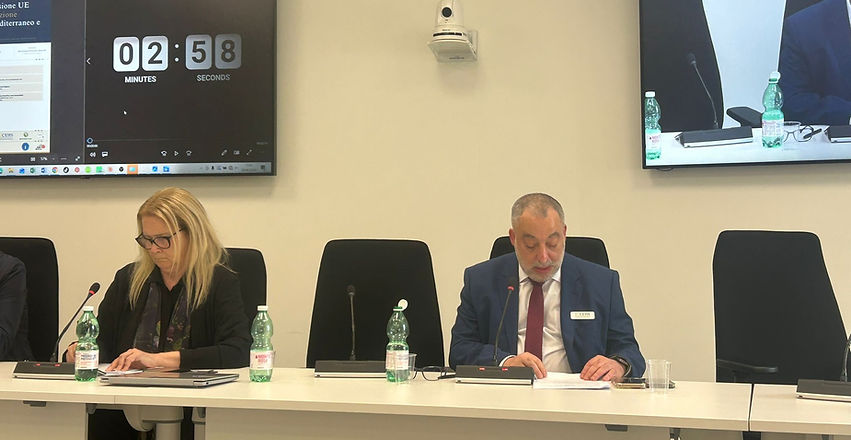
Ribal Dayekh, Head of Communication at ICCEHS, focused his intervention on the strategic communications architecture required to support the establishment of the proposed Euro-Gulf Centre for Science Diplomacy and Sustainable Development. Presenting a comprehensive communications framework, he outlined how effective public engagement, institutional cooperation, and international visibility can transform the initiative into a long-term platform for regional collaboration.
Dayekh described science diplomacy as one of the most effective instruments of modern soft power, capable of transcending political differences, fostering trust among nations, and creating sustainable channels of cooperation across Europe, the Mediterranean, and the Gulf. He argued that scientific collaboration, reinforced by strategic communication, can accelerate innovation, strengthen resilience, and deepen cross-regional partnerships.
“Knowledge-sharing, transparent communication, and collaborative storytelling are essential to transforming ambitious visions into practical achievements. The proposed Centre has the potential to become a platform where science, diplomacy, innovation, and communication converge to address shared regional challenges, promote sustainable development, and strengthen mutual understanding across borders.”

The conference agenda was structured around four interconnected thematic pillars reflecting today’s most pressing regional priorities. The first panel examined the evolving geopolitical landscape, exploring the strategic implications of EU-Gulf relations, the Abraham Accords, and Italy’s Mattei Plan in shaping a new architecture for cooperation across the Greater Mediterranean and the Gulf.
The second panel shifted the focus to the societal dimension, examining practical approaches to protecting religious freedom, promoting intercultural dialogue, and strengthening inclusive communities as essential foundations for regional stability. The third panel highlighted the restoration of the Church of the Nativity in Bethlehem as a powerful example of international cooperation in preserving cultural and religious heritage while underscoring the importance of interfaith dialogue in safeguarding sacred sites and fostering mutual understanding.
Looking toward the future, the fourth panel presented the proposal to establish a Euro-Gulf Centre for Innovation, Higher Education, and Science Diplomacy for Sustainability. Participants explored how scientific cooperation, higher education, technological innovation, and sustainability can serve as strategic drivers for deeper Euro-Gulf collaboration, creating new opportunities for knowledge exchange, economic development, and long-term regional resilience.
The conference concluded with a shared commitment among participants to strengthen cooperation between Europe and the Gulf through dialogue, innovation, education, and people-to-people engagement. Participants reaffirmed that promoting tolerance, countering extremist and hate narratives, advancing science diplomacy, and investing in strategic partnerships remain essential pillars for building a more peaceful, resilient, and prosperous future across the Euro-Mediterranean and Gulf regions.